From Sails to Mega-Ships: The Evolution of Maritime Trade
Global trade did not begin with globalization. For thousands of years, ships have carried goods, ideas, and cultures across the seas. The history of the cargo ship is, in many ways, the history of the connected world.
The Age of Sail: Trade Powered by Wind
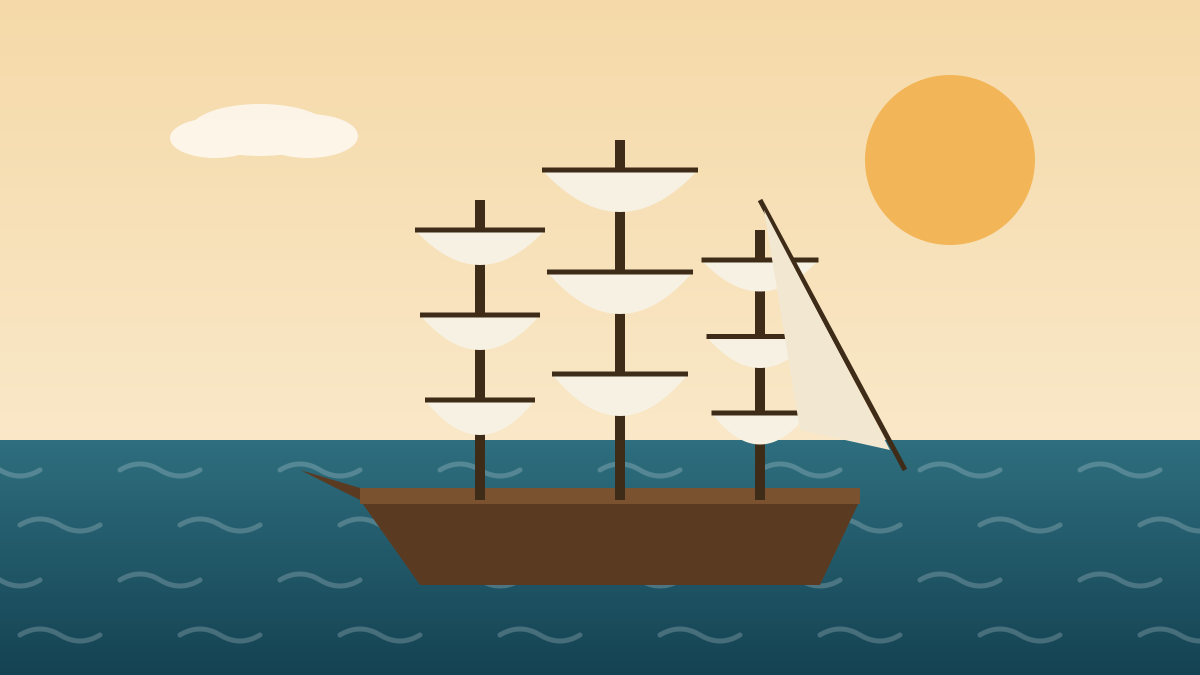
Long before engines existed, merchants relied entirely on wind and ocean currents. Phoenician traders crossed the Mediterranean carrying cedar wood, glass, and purple dye. Chinese junks sailed the South China Sea with silk and porcelain. Arab dhows connected East Africa, the Middle East, and India in a vast trading network.
By the 15th and 16th centuries, European caravels and galleons opened intercontinental routes, linking continents for the first time in sustained commercial exchange. Voyages took months, cargo capacity was small, and losses at sea were common — yet these ships laid the foundations of the first truly global markets.
The Steam Revolution
The 19th century changed everything. Steam engines freed ships from dependence on wind, making schedules predictable for the first time. A merchant could now promise delivery dates.
Two developments amplified this revolution:
Iron and steel hulls allowed ships to grow far beyond the limits of wooden construction.
The opening of major canals — Suez in 1869 and Panama in 1914 — cut thousands of kilometers from key trade routes, dramatically reducing travel time between oceans.
Steam-powered trade expanded international commerce at a pace the world had never seen, connecting distant economies into increasingly integrated markets.
The Container Era: Standardization Wins
The single greatest leap came in the mid-20th century with the standardized shipping container. By turning cargo into uniform steel boxes, the industry eliminated the slow, manual loading that had defined ports for millennia.
The results were staggering:
- Port loading times dropped from days to hours.
- Cargo theft and damage fell sharply, since containers stay sealed from factory to destination.
- Shipping costs per unit became so low that distance nearly stopped mattering in production decisions.
Economists widely credit containerization as a key catalyst of late 20th-century globalization — arguably as important as any trade agreement.
Today: The Age of Mega-Ships
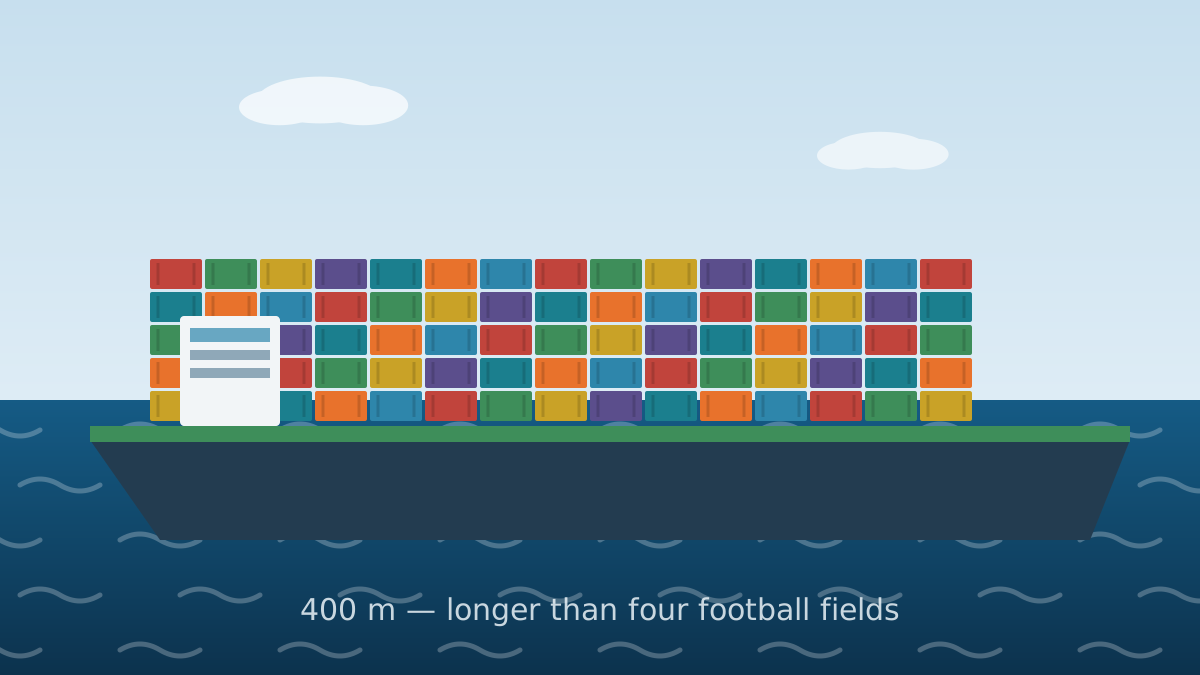
Modern vessels dwarf everything that came before. The largest container ships exceed 400 meters in length and carry over 24,000 standard containers. Specialized vessels have evolved for every type of cargo: tankers for oil and gas, bulk carriers for grain and ore, car carriers that function as floating parking garages, and refrigerated ships that keep food fresh across oceans.
Navigation is now guided by satellites, engines are monitored by sensors, and ports use automated cranes that move containers with minimal human intervention.
What Comes Next?
The next chapter is already being written. Shipbuilders are testing alternative fuels such as methanol, ammonia, and even modern wind-assist technology — a return, in a sense, to where it all began. Autonomous and remotely monitored vessels are moving from concept to pilot projects.
Conclusion
Every era of shipping technology has expanded what global trade could be. The sail connected regions. Steam connected continents. Containers connected factories to consumers everywhere. Whatever powers the ships of tomorrow, one thing is certain: the world economy will continue to float on them.
Frequently Asked Questions
When did container shipping begin?
The modern era began in 1956, when Malcom McLean's converted vessel Ideal X carried 58 containers from Newark. International standardization of container dimensions in the 1960s then allowed the system to spread worldwide.
Why did steamships replace sailing ships?
Steam offered what wind never could: predictable schedules and independence from weather patterns. Combined with iron and steel hulls and shortcuts like the Suez Canal, steam made reliable long-distance commerce possible.
How long does it take to build a large merchant ship?
From cutting the first steel to delivery, large cargo vessels are typically completed in roughly one to two years, though design and ordering add time before that. Complex ships such as cruise vessels take longer.
What was trade like before standardized containers?
Cargo moved as individual pieces — sacks, barrels and crates loaded by hand. Ships could spend as long in port as at sea, costs were high, and theft and damage were common, which kept international trade far more expensive than today.
Sources & Further Reading
- UNCTAD — Review of Maritime Transport: unctad.org
- International Maritime Organization (IMO): imo.org
- World Shipping Council: worldshipping.org